
Rust Color Shades: Iron Oxide Origins and Named Rust Tones
Rust is the color of iron left out in the rain. Warm, slightly unpredictable, and impossible to look away from, these shades run the gamut from bright oxidized orange to the darkest brown-red you have ever seen on a weathered gate.You will find every rust shade on this page, each with exact hex, RGB, and CMYK values. Whether you are designing a fall collection or working with industrial interiors, the spectrum is mapped out here.
#c9a0df

Silver Rust Color
Nothing in Silver Rust color is silver, and nothing is rusty. At #c9a0df it’s a soft lilac with strong blue, so the name plays like a riddle while the swatch is a gentle orchid purple.
#a83c09

Rust Color
Oxidized iron on an abandoned tractor in a Kansas field. Rust color (#a83c09) lands warm, rugged, vintage. Teal and cream turn it into a proper industrial-modern palette.
#8b3103

Rust Brown Color
Leave an iron gate in coastal air for a decade and you’ll end up with something close to Rust Brown, hex #8b3103. It’s a deep burnt orange-brown that gives industrial design unexpected warmth. Cream and forest green push it into magazine territory; pure white makes it look lost.

#c9a0df
Silver Rust
#a83c09
Rust
#765138
Umber Rust
#8b3103
Rust Brown
#a46454
Rust Coloured
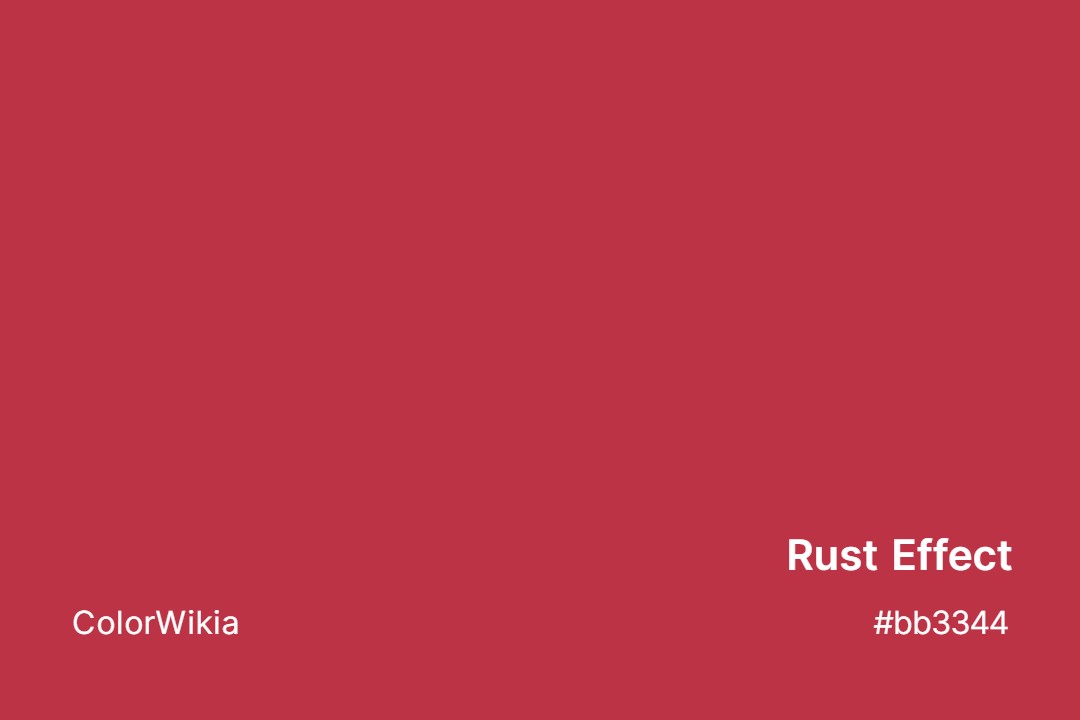
#bb3344
Rust Effect
#966684
Rust Magenta
#c45508
Rust Orange
#aa2704
Rust Red
#926956

Rio Rust
#a25d4c
Remington Rust
#8a3319
Red Rust
#c56543
Orange Rust
#9a5f3f
Harrison Rust
#95524c
Copper Rust
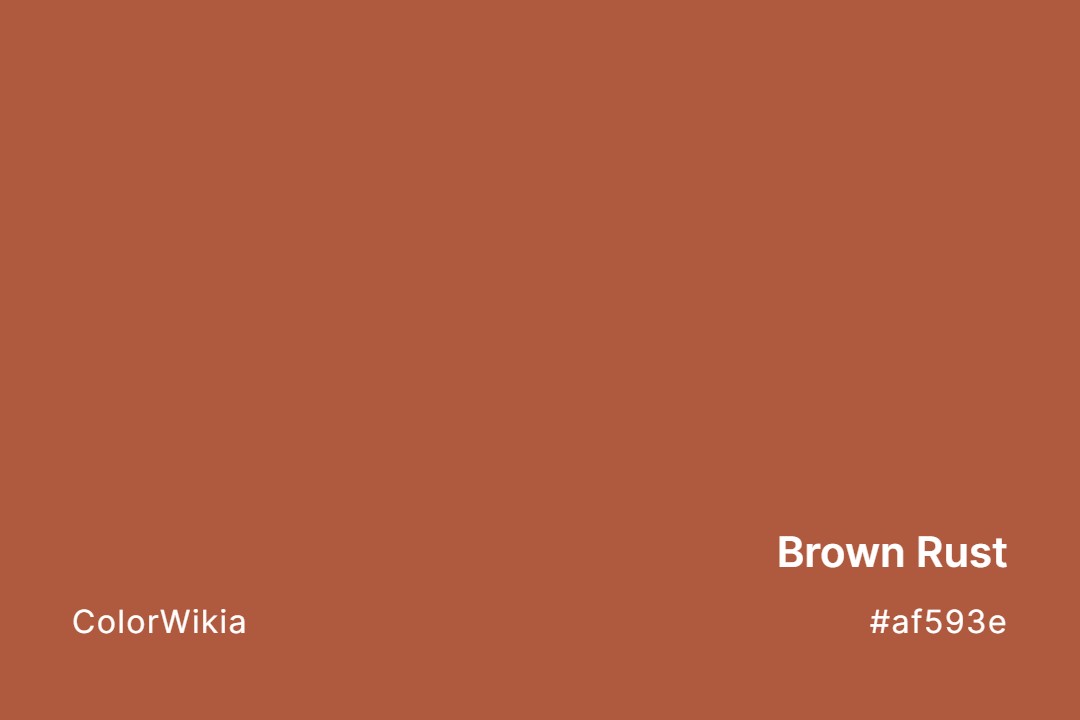
#af593e
Brown Rust
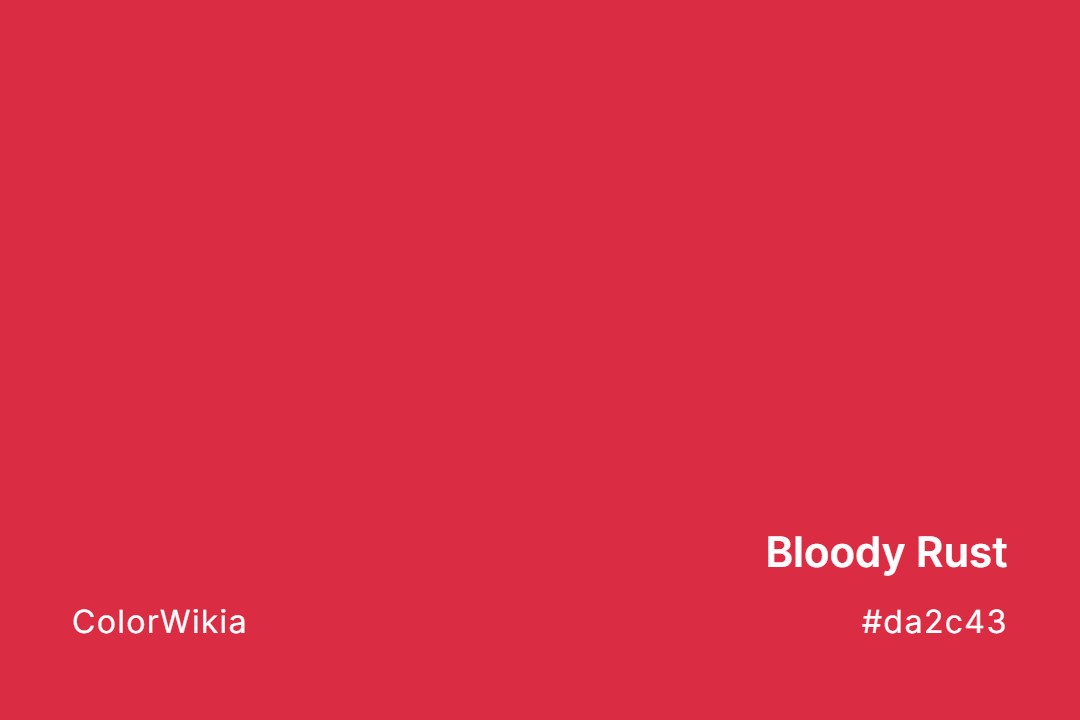
#da2c43
Bloody Rust




Rust gets its name from the reddish-brown coating that forms when iron reacts with oxygen and water. The chemistry behind that process produces iron oxide compounds, and the resulting earthy color has become a familiar reference in art, fashion, materials, and design.
Unlike a purely abstract color name, rust is tied to a physical process people can see on metal. That connection helps explain why rust color shades range through orange, red, and brown rather than occupying one narrow position on the color spectrum.
Rust Color Origin and Chemistry
The color associated with rust comes from iron oxide, including hydrated forms of iron oxides. Related iron-rich earth pigments include ochre, sienna, umber, and hematite, all of which have long histories in visual art.
Iron compounds do not produce one fixed color. Changes in mineral composition, moisture, heat, and processing can shift an earth pigment from yellow to red or brown. Heating raw earth pigments can produce deeper red and orange tones, which helps explain the relationship between rust and traditional earth colors.
The result is a color family rather than a single visual formula. When people describe something as rust-colored, they may be referring to a red-orange tone, a dark brown-orange, or a muted earthy red.
Historical Uses of Rust Colors
Iron oxide pigments rank among the oldest colorants used by humans. Cave paintings at Lascaux in France and Altamira in Spain, dated to around 17,000 years ago, contain iron oxide pigments that produce reddish and brown tones.
Ancient Egyptians also used iron-rich materials in pottery decoration and cosmetics. Much later, Renaissance painters such as Titian and Rembrandt worked extensively with earth pigments in warm palettes.
Sienna and umber became particularly important examples. Their names come from places in Italy, with sienna associated with Siena and umber associated with Umbria. These pigments belong to the broader earth-tone family that overlaps with rust.
Popular Rust Color Shades
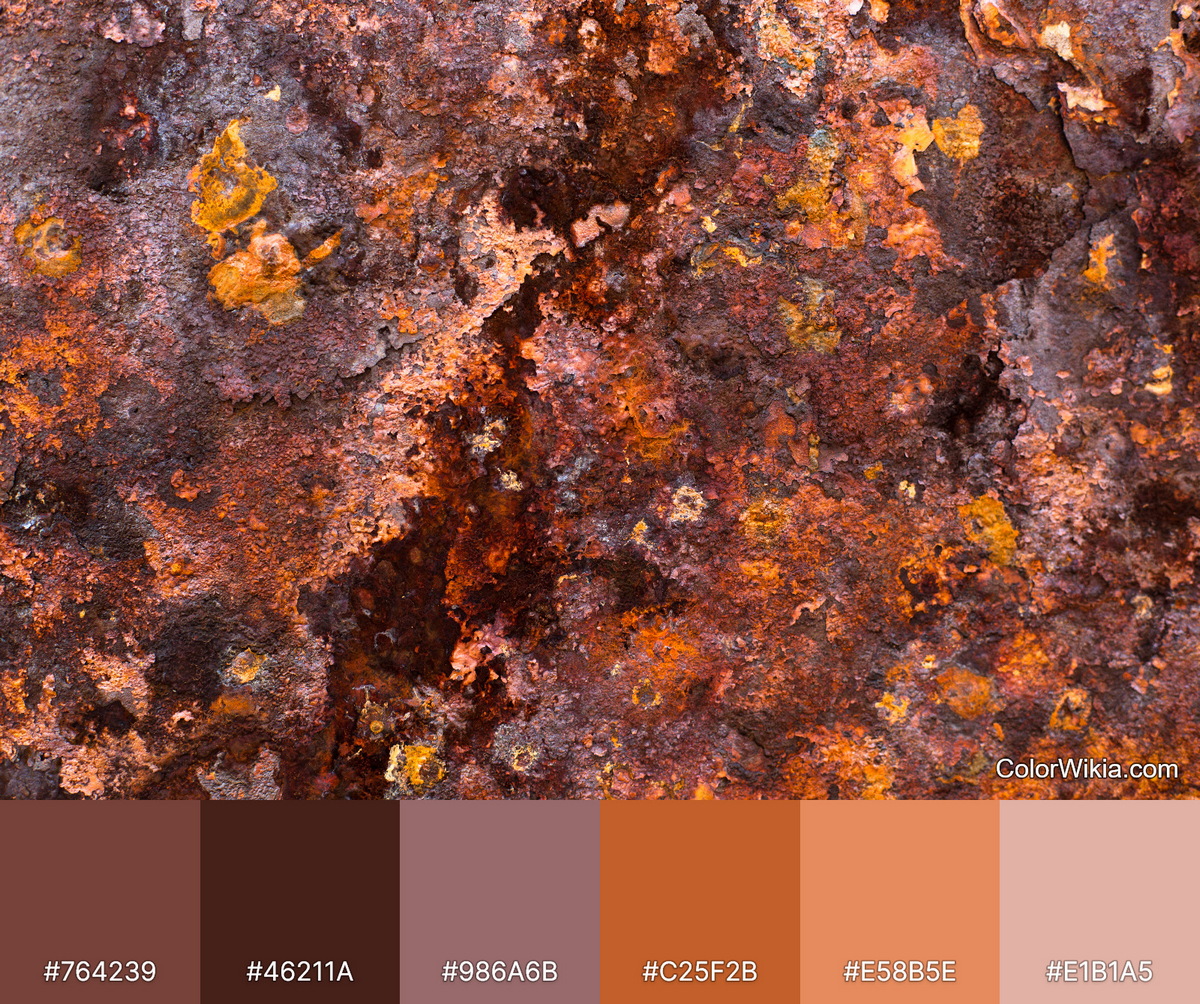
Rust combines orange, red, and brown, but individual rust shades can fall much closer to one of those colors than the others.
| Shade Name | Hex Code | RGB |
| Rust (base) | #B7410E | 183, 65, 14 |
| Burnt Sienna | #E97451 | 233, 116, 81 |
| Terracotta | #E2725B | 226, 114, 91 |
| Copper | #B87333 | 184, 115, 51 |
| Mahogany | #C04000 | 192, 64, 0 |
| Rust Brown | #8B4513 | 139, 69, 19 |
| Dark Rust | #8B3103 | 139, 49, 3 |
| Orange Rust | #C45508 | 196, 85, 8 |
Burnt sienna comes from heating raw sienna clay, which deepens the pigment toward red-brown. Terracotta takes its name from fired clay and occupies a softer orange-brown area.
Copper captures the warm brown-orange appearance associated with the metal. Mahogany and rust brown move deeper toward brown, while dark rust pushes the family toward a denser, darker orange-brown.
At the brighter end, orange rust carries more orange and less brown. That makes it visually different from mature corrosion, which usually shifts toward darker and duller tones.
Light and Dark Rust Shades
There is no single official boundary between light rust and dark rust. In practical use, lighter rust shades usually contain more orange or red and sit at a higher lightness, while darker versions move toward brown.
The same distinction can also be described through saturation. A vivid orange-rust color looks quite different from a muted rust brown even when both share a similar hue.
This gives designers more flexibility when choosing a rust shade. A brighter rust can feel warmer and more energetic, while a darker rust can create a heavier, more grounded appearance.
Rust in Fashion and Design
Rust became strongly associated with earth-tone fashion during the 1970s, when it appeared alongside colors such as harvest gold and avocado green. The palette later returned to fashion and interiors during the late 2010s, when warm, muted earth colors gained renewed attention.
Rust is also closely tied to materials. It appears in visual references to weathered iron, clay, leather, wood, and natural earth pigments.
Those associations explain why rust often turns up in product packaging, furnishings, outdoor gear, and other designs that use an earthy visual language. The color can suggest age, warmth, natural materials, and weathered surfaces without literally showing corrosion.
Rust and Related Colors
Rust sits near several familiar color families. Its orange component connects it to orange color shades, while darker members move toward brown color shades.
Terracotta and burnt sienna overlap with the red color family, although each has its own naming history and typical appearance. Beige and muted green are also common neighbors when rust is treated as part of a broader earth-tone palette.
| Related color | How it compares with rust |
| Orange | Brighter and generally more orange |
| Brown | Darker and generally less saturated |
| Terracotta | Softer, clay-like orange |
| Burnt sienna | Warmer red-brown earth tone |
| Beige | Much lighter and less saturated |
| Muted green | Contrasting earthy color often used alongside rust |
The boundaries are not absolute. Named colors can overlap, and their appearance can vary depending on the digital value, material, lighting, and surrounding colors.
Frequently Asked Questions
What color is rust?
Rust is usually a warm red-orange or orange-brown color. Different rust shades can lean closer to red, orange, or brown.
Is rust a shade of orange or brown?
It sits between both families. Most versions are best described as dark orange-brown, although some are much redder or browner.
What is the difference between rust and terracotta?
Rust generally looks deeper and more saturated, while terracotta usually has a softer clay-like orange character. The two overlap closely.
Where does the rust color get its name?
The name comes from the reddish-brown material that forms when iron corrodes. The color reference developed directly from that physical process.
What is the rust color hex code?
A commonly referenced base value is #B7410E, with RGB values of 183, 65, 14. Named related shades use different digital values.
Final Thoughts
Rust is easier to understand when you treat it as a family of earthy colors rather than one exact swatch. Its connection to iron oxide gives the name a physical history, while related pigments such as sienna and umber help explain its wide range of red, orange, and brown tones.
For digital design, #B7410E is a useful base reference, but the right rust shade depends on the appearance you need. Lighter, brighter versions can move toward orange, while darker versions create a deeper brown-red effect.