
30,000+ Shades of Color with Names and HEX Code
Explore unique color shades for your website, brand or any project.
#c9c0bb

Worn Silver
#695c39
Plum Green
#b7bdc4
Silver Springs
#8b5e52
Red Curry
#7fcce2
Blue Limewash
#b8bcbb
Monorail Silver
#bdb369
Golden Green
#f2bddf
Pink Heath
#98d2d9
Maya Green
#f7c380
White Elf
#326a2b
Radical Green
#a6a23f

Machine Green
#da1d38
Incubation Red
#469f4e
Fervent Green
#f1d4c4
Melon Pink
#885a55
Red Willow
#e8e5d8
Brilliant Yellow
#008a8e
India Blue
#998e91
Ash Pink
#41b57e
Ming Green
#b8bcbc
French Silver
#f3daa7
Cream Yellow
#0a696a
Bath Green
#c6cec3
Silver Grass
#a3c893
Arcadian Green
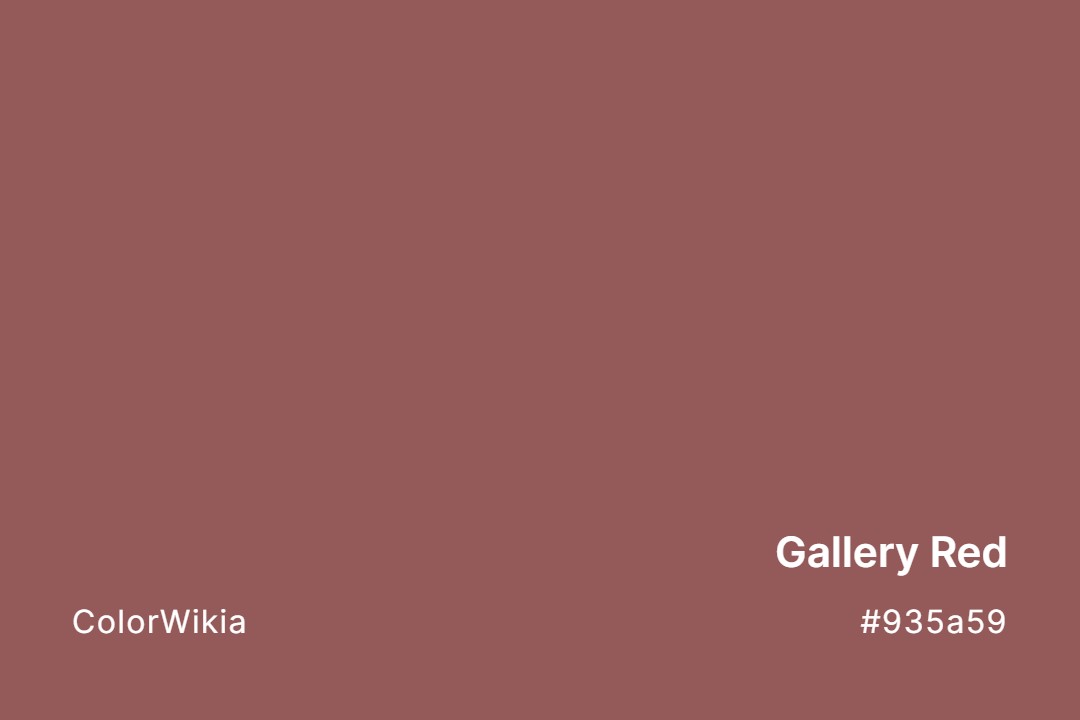
#935a59
Gallery Red
#15633d
Fun Green
#747962
Deep Lichen Green
#600000
Spikey Red
#dd1133
Rare Red
#83ccd2
White Ultramarine
#efcdcb
Kislev Pink
#264e50
Seagrass Green
#70d4fb
Heisenberg Blue
#c7c7c9
Shining Silver
#53a144
Green Acres
#8c9632
Airline Green
#c7c6c0
Silver Sateen
#83477d
Visiona Red
#76c4d1
Twisted Blue
#2a8000
Napier Green
#aab350
Delaunay Green
#adc484
Gnome Green
#946877
Copper Pink
#47ba87
Aragon Green
#008893
Tuscana Blue
#006c2e
Ireland Green
#d8e1f1
Aquarelle Purple
#dd1144
Red Herring
#00898c
Industrial Blue
#b8bebe
Samovar Silver
#a7598d
Cyclamen Red
#edc2db
Starlet Pink
#426255
Palace Green
#2f847c
Celadon Green
#a5a542
Camo Green
#008793
Blue Slushie
#bcb58c
Urahayanagi Green
#434c47
Sporting Green
#bbc5c4
Silver Whiskers
#0b8b87
Greenish Blue
#e1dee7
Minified Purple
#ff0008
Marinara Red
#ff0800
Candy Apple Red
#66ddff
Athena Blue
#3a6364
Pyrite Green
#349b82
Green Jelly
#00564f
Castleton Green
#3aa098
Baltic Green
#f9eed0
Yellow Beam
#b7c9e2
Light Blue Grey
#317873
Myrtle Green
#019529
Irish Green
#f5d1c8
Cloud Pink
#3a6960
Seiheki Green
#007722
Green Glutton
#408750
Imperial Green
#419f59
Chateau Green
#00888b
Well Blue
#4db560
Samphire Green
#9a7276
March Pink
#eadce2
Purple Emulsion
#fefecd
Ice Yellow
#a9c4a6
Green Bark
#a3b9ac
Silt Green
#ede7d7
Homeopathic Yellow
#00656e
Wakame Green
#bbbbc1
Mithril Silver
#dfdfea
Timid Purple
#b2b55f
Green Me
#7ed4e6
Middle Blue
#52bc9a
Expressionism Green
#305144
Highland Green
#a3d0b6
Feather Green
#faf3cf
Yellow Bombinate
#9f6859
Russet Red
#78cf86
Jube Green
#16f8ff
Hey Blue!
#a9606e
Marble Red
#a8b453
Green Banana




The language of color can become confusing because everyday speech and color theory do not always use the word shade in exactly the same way. A page about color shades may describe a whole group of related colors, while the technical definition of a shade refers specifically to a hue made darker with black.
That difference matters when you compare taupe color shades, rust shades, or any other color family. The names people use are practical labels, while color systems provide more precise ways to describe the underlying values.
Understanding the difference between shade, tint, tone, and hue makes it easier to talk about color accurately. It also explains why one named color can have several related variations.
What Is a Color Shade?
In strict color theory, a shade is a hue with black added. Adding black lowers the lightness and produces a darker version of the starting color. A red can move toward burgundy, for example, while a blue can move toward navy.
In everyday language, people use shade more broadly. A search for “different shades of blue” may include lighter, darker, muted, and named variations that are not technically shades under the narrow definition.
That broader usage is common in design, retail, fashion, and online color references. It is also why color shade pages usually cover a family of related colors rather than only mixtures created by adding black.
The distinction is useful because it separates technical color terminology from the way people normally describe color families.
Shade, Tint, Tone, and Hue
These four terms describe different relationships between colors.
- Hue refers to the pure color position itself, such as red, blue, green, or yellow.
- Tint is a hue with white added, producing a lighter version such as pink from red.
- Shade is a hue with black added, producing a darker version such as burgundy from red.
- Tone is a hue with gray added, reducing saturation and muting the color.
The distinctions become useful when you need to describe why two colors look different. A pale blue may be a tint, while a dusty blue may be a tone and a navy blue may be a shade.
These terms can also be used together when discussing a larger color family. A named color may be lighter than the base color, darker than it, or more muted without fitting neatly into one everyday category.
How Digital Color Systems Describe Shades
Digital color systems make these relationships easier to quantify. RGB describes a color by the amount of red, green, and blue light used to create it, while HSL separates the color into hue, saturation, and lightness.
Hex codes provide a compact representation of RGB values. A six-character code such as #DC143C can identify crimson in a digital interface, but the number does not tell you where the color name originally came from or whether a physical pigment uses the same formulation.
In HSL, reducing lightness while holding hue and saturation constant moves a color toward a darker digital version. Raising lightness moves it toward a lighter version, while reducing saturation creates a more muted result.
This distinction is important when working with digital color. A color name can provide a useful visual reference, but a hex code gives you a specific digital value.
How Color Shade Names Develop
Color names often come from things people recognize. Taupe refers to the mole, while rust takes its name from corroded iron. Other names come from materials or places, including copper, terracotta, mahogany, sienna, and umber.
Language can preserve those histories even after a color becomes a digital swatch. Khaki color shades provide another example because the word traces back to a Hindustani term connected with dust and earth.
Commercial color naming adds another layer. Paint makers, textile companies, standards groups, and digital platforms may assign different names to closely related colors, so one shade does not always have one universal label.
This is one reason color names can feel inconsistent. A name can describe a recognizable visual family without pointing to one universal digital value.
Color Standards and Shade Codes
Professional color systems exist because names alone are too vague for precise reproduction. The Pantone Matching System assigns numbered references to color formulations, while systems such as Munsell describe colors using hue, value, and chroma.
The Natural Color System uses a different framework based on color perception. These systems serve different purposes, but they share the same practical goal. A numeric reference can communicate more precisely than a word such as “blue” or “green.”
That is also why a page listing color codes should distinguish between a named color, a standardized reference, and an ordinary digital hex value.
A hex code is useful for digital work, but it should not automatically be treated as a universal definition of a named color. The context behind the color reference matters.
Major Color Families and Their Shades
Every broad color family branches into many named variations. The examples below show how familiar shade names sit within larger groups.
| Color Family | Popular Shade | Hex Code |
| Red | Crimson | #DC143C |
| Blue | Navy | #000080 |
| Green | Forest Green | #228B22 |
| Yellow | Gold | #FFD700 |
| Purple | Indigo | #4B0082 |
| Orange | Coral | #FF7F50 |
| Brown | Tan | #D2B48C |
Warm families such as orange and brown include earthy variations such as rust, terracotta, and chocolate. Blue and green branch into names such as navy, teal, forest, and olive.
Neutral families work differently because their boundaries are less obvious. Beige, gray, taupe, and related colors can overlap substantially depending on saturation, lightness, and undertone.
Why named colors can overlap
A useful color family is not always a strict technical category. Two colors can look very similar while carrying different names because the names come from different materials, places, industries, or traditions.
For practical design work, it is often more useful to compare the actual color values than to rely on the name alone.
Frequently Asked Questions
What is the difference between a shade and a tint?
A shade is a darker version created by adding black, while a tint is a lighter version created by adding white.
Is a tone the same as a shade?
No. A tone adds gray and reduces saturation, while a shade adds black and darkens the original hue.
Why does one color have so many shade names?
Different industries, standards groups, companies, and cultures develop names independently. Closely related colors can therefore receive several labels.
How many shades of a color are there?
There is no fixed limit. Digital systems can generate very large numbers of distinct values, while named shades depend on the terms that become widely recognized or useful.