
35 Khaki Color Shades: Military Origins, Variations, and Hex Codes
Khaki is the earth neutral you are probably wearing right now. It sits between beige and light brown with a green-grey undertone that separates it from flat tan. Originally military, now everywhere.This collection maps light dusted khaki to deeper brown-khaki with full color codes. Navy, white, olive. Khaki plays nicely with all of them. That is the point of a neutral.
#c3b091

Khaki Color
The heritage color of army fatigues, safari jackets, and every dad’s summer shorts. Khaki color (#c3b091) is a warm sandy tan with just enough grey to feel military rather than tropical. Navy, olive, and cream do the heavy lifting beside it.
#728639

Khaki Green Color
The xkcd color survey lists khaki green at exactly #728639, the same hex as this swatch. Khaki Green color is a dark olive-yellow near CSS olivedrab, the shade of a safari jacket or military webbing. Warm light turns it mustard.
#728639

Khaki Green
#b8ae98
True Khaki
#d6cdb7
Desert Khaki
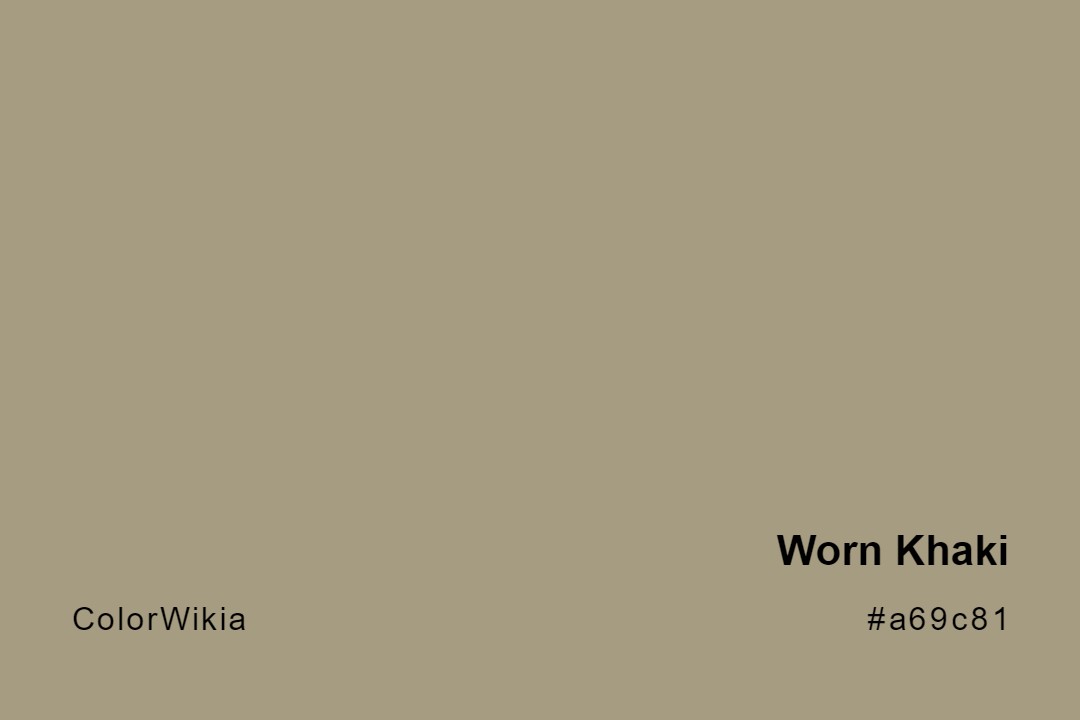
#a69c81
Worn Khaki
#cac2af
Washed Khaki
#958b80
Vintage Khaki
#b8a992
Universal Khaki
#a1965e
Terran Khaki
#c8bba3
Relaxed Khaki
#b2a492
Perfect Khaki
#998877
Pale Khaki
#d9c7aa
New Khaki
#998d7c
Light Khaki
#c0bd81
Krieg Khaki
#9d907e
Kommando Khaki
#888877
Kosher Khaki
#954e2a
Khaki Brown
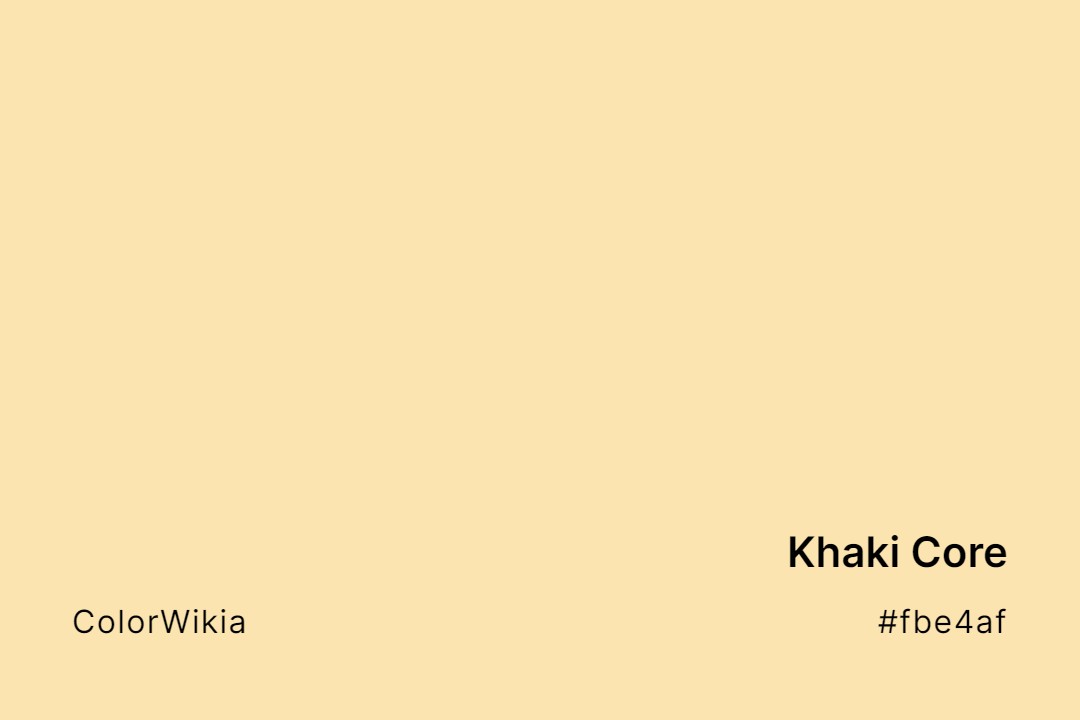
#fbe4af
Khaki Core
#d4c5ac
Khaki Shade
#c9beaa
Khaki Shell
#c3b091
Khaki
#c7bea7
Jungle Khaki
#d3b09c
Indian Khaki
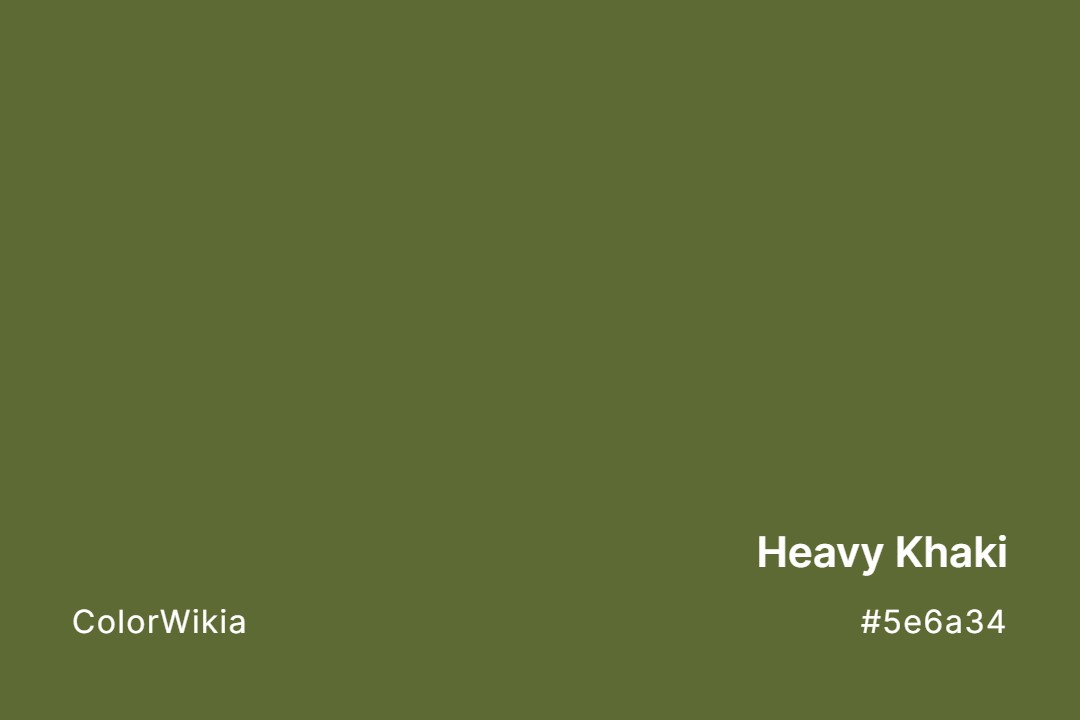
#5e6a34
Heavy Khaki
#78766d
Forest Floor Khaki
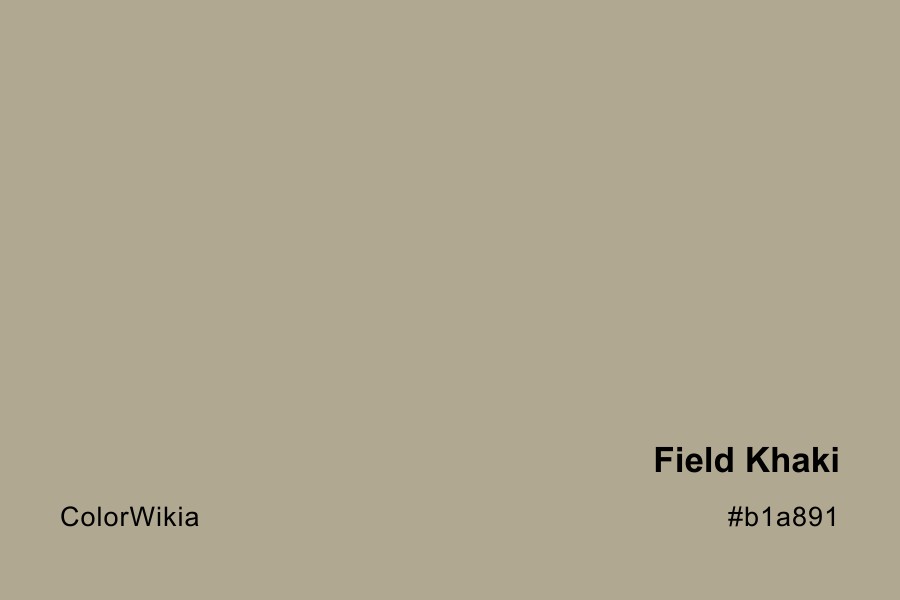
#b1a891

Field Khaki
#a5975b
Faded Khaki
#b6ac95
Explorer Khaki
#aa9a79
Exploring Khaki
#dbbf90
Expedition Khaki
#666600
Earthy Khaki Green
#d3c5af
Casual Khaki
#bcaf97
British Khaki
#f1e78c
Bright Khaki
#c3b69f
Basic Khaki









Khaki takes its name from a Hindustani word meaning dust-colored, derived from khak for dust or earth. The term entered English through British India during the 19th century and became strongly associated with military uniforms.
That history explains why khaki color shades can look so different from one another. Some versions are pale and yellowish, while others are dusty tan or olive brown.
The digital color called khaki adds another layer of confusion because the web-standard version is much lighter and yellower than the traditional military color.
Khaki Color Origin and Military History
The military history of khaki is closely tied to British India. The Corps of Guides, raised by Lieutenant Harry Burnett Lumsden at Peshawar in December 1846, began using a dusty uniform color around 1848. Early dyes included improvised materials such as mud, tea, and local plants.
Khaki later spread through the British Army during campaigns in the late 19th century, including the Second Boer War from 1899 to 1902. The muted color offered a practical alternative to brighter military uniforms and became associated with field dress.
The United States Army also authorized khaki cotton field uniforms for tropical service in 1898 during the Spanish-American War. By the First World War, major armies had adopted a range of muted military colors, although those colors were not identical from one country to another.
This history helps explain why there is no single visual formula that represents every use of the word khaki.
Why Are There Two Different Khakis?
One of the most useful things to know about khaki is that the word refers to more than one established color reference.
The web and CSS color named khaki uses the hex code #F0E68C, a pale yellow-green. Traditional military khaki is much closer to a dusty tan, with #C3B091 serving as a commonly referenced digital representation.
This difference explains a common search question: “What color is khaki?” Someone expecting a military uniform may picture a muted tan, while someone checking a CSS palette will see a pale yellow.
Both references are established in different contexts. The name alone does not tell you which version a person or system is using.
Popular Khaki Color Shades
Khaki ranges from pale sandy colors to deeper olive-brown variations. The following table brings together commonly referenced digital values.
| Shade Name | Hex Code | RGB |
| Khaki (web) | #F0E68C | 240, 230, 140 |
| Dark Khaki | #BDB76B | 189, 183, 107 |
| Military Khaki | #C3B091 | 195, 176, 145 |
| Light Khaki | #F0E9C9 | 240, 233, 201 |
| Olive Khaki | #8F8B4A | 143, 139, 74 |
| Desert Khaki | #C3B091 | 195, 176, 145 |
| Olive Drab | #6B8E23 | 107, 142, 35 |
Dark khaki is a muted olive-tan in the standard CSS palette. Military khaki and desert khaki sit closer to the dusty tan associated with the original uniforms.
Olive khaki and olive drab shift the family toward green. Lighter versions move toward cream and beige, which makes the full khaki range wider than its military history alone might suggest.
Light Khaki Shades
Light khaki shades have higher lightness and usually look closer to pale beige, sand, or yellowed cream. The web-standard khaki value is a good example because its yellow component is much stronger than the traditional military version.
These lighter colors can also change noticeably under different lighting. Warm light can strengthen yellow and tan undertones, while cooler light can reduce some of that warmth.
For digital work, a light khaki can therefore look different depending on the colors placed around it. The same principle applies when comparing a screen-based swatch with a physical fabric or painted surface.
Dark Khaki Shades
Dark khaki versions move toward olive, brown, or both. Dark khaki in the CSS palette is a good example, while olive drab pushes even further toward green.
The distinction between dark khaki and olive colors can be difficult because the two groups overlap. In clothing and military contexts, the name often depends on tradition and usage as much as on the exact digital value.
This is another reason to check the actual color reference before choosing a shade for a project. A name such as “dark khaki” may not communicate exactly the same color to every audience.
Khaki in Civilian Life
Khaki moved from military clothing into everyday dress through trousers, uniforms, and casual wear. Chino pants trace their early history to the Spanish-American War, when American soldiers in the Philippines wore cotton twill trousers imported from China.
After the war, surplus trousers entered civilian life, and chinos later became a fixture of business-casual clothing. By the 1990s, khaki had become strongly associated with office-casual wardrobes as well as outdoor clothing.
The color also remains linked with safari clothing, workwear, and other practical garments. Those uses retain some of the material history that shaped the word in the first place.
The result is a color name that now sits comfortably across military, fashion, workwear, and everyday design contexts.
Khaki and Related Colors
Khaki overlaps with several earth-tone families. Lighter versions move toward beige color shades, while greener versions approach the olive color family.
Taupe provides another useful comparison because both families can contain muted brown-gray neutrals. Taupe color shades generally carry more gray, while khaki often retains a stronger yellow, tan, or olive component.
| Related color | How it compares with khaki |
| Beige | Lighter and often more neutral |
| Olive | Greener and usually stronger in green undertones |
| Taupe | Grayer and less yellow |
| Brown | Deeper and generally less yellow |
| Cream | Much lighter and softer |
These relationships are approximate rather than fixed boundaries. Named colors can overlap, particularly when saturation and lightness change.
Frequently Asked Questions
Is khaki a shade of green or brown?
It depends on the reference. Web khaki is yellowish, military khaki is closer to tan-brown, and olive khaki shifts toward green.
Why does khaki look different on screen than on clothing?
The CSS color named khaki and the traditional military color represent different color references. One is pale and yellow, while the other is a dustier tan.
Physical materials can also change how a color appears because lighting and surrounding colors affect visual perception.
What color is khaki?
Khaki is a broad family of dusty yellow, tan, olive, and brownish colors. The exact appearance depends on the naming system and context.
Where does the word khaki come from?
It comes from a Hindustani word meaning dust-colored and traces back to the Persian word for dust or earth. British forces in India adopted the term in the 19th century.
What are common khaki color hex codes?
The web-standard khaki code is #F0E68C. Military khaki is commonly represented by #C3B091, while dark khaki uses #BDB76B.
Final Thoughts
Khaki is a good example of why color names cannot always be treated as exact digital specifications. Its military history established one familiar form of dusty tan, while the web and CSS color system uses a much lighter yellow-green reference.
The broader khaki family includes pale, tan, olive, and brownish variations. When choosing a khaki shade, check the actual hex value or physical color reference rather than relying on the name alone.