
50 Midnight Color Shades, Types, and Usage Examples
Midnight colors hover just above pure black with deep blue or purple hiding in the background. They bring the darkness you want without the flat, dead feeling that absolute black gives off.The collection runs from soft midnight blue to near-black navy. Gold and silver look incredible on top of these tones, which is exactly why luxury branding reaches for them constantly.
#003377

Dark Midnight Blue Color
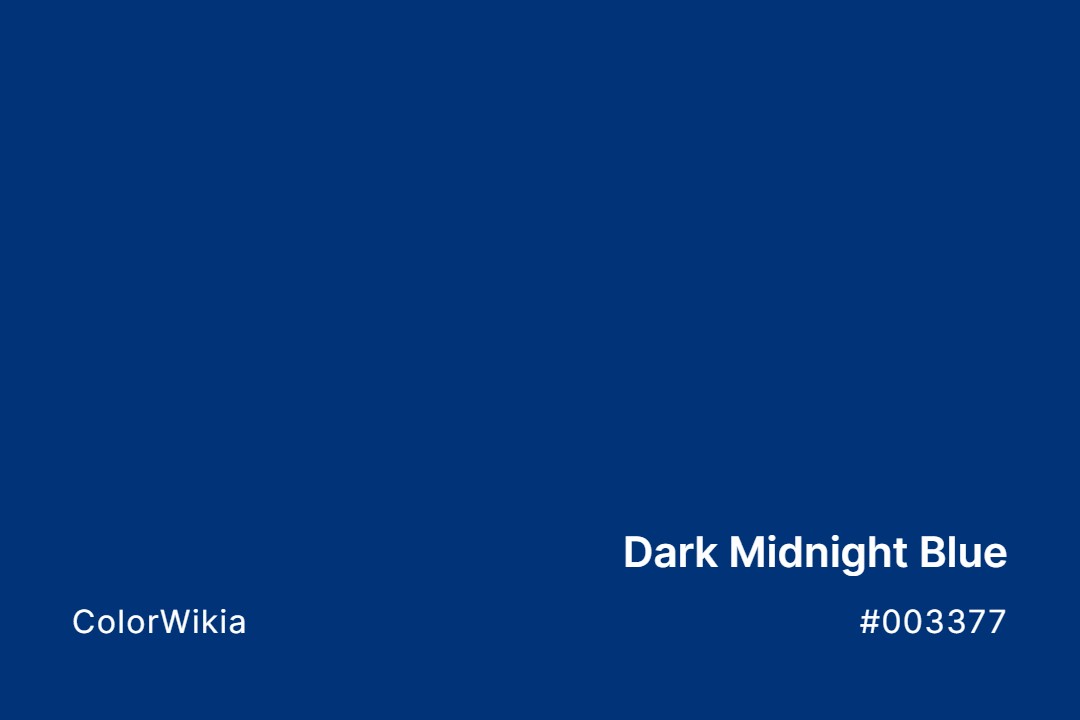
Universities, banks, and law firms pick it for the same reason: it reads as “serious” without trying. Dark Midnight Blue color (#003377) is a deep cobalt-leaning navy with enough depth to feel weighty. Pair with gold and warm cream for brands that want to look like they’ve been around for a century.
#004953
Midnight Green Color
Ask a Philadelphia Eagles fan what color their team wears and watch the argument that follows. Midnight green (#004953) reads black in some light, teal in other light, and never quite settles down, which is exactly why the Eagles picked it in 1996. Cream and brass bring out the depth.
#666a6d
Midnight Grey Color
A cool mid-grey with a faint blue drift. Midnight grey color (#666a6d) reads urban and slightly moody, the color of concrete after rain. Works well in tech branding and industrial-inspired interiors.
#020035

Midnight Blue Color
Almost black, but not quite. There’s just enough blue left in midnight blue color (#020035) to catch the light and feel expensive under lamplight. Tuxedo suppliers and Bentley interior specifiers picked this over #000000 decades ago for the same reason: black photographs flat, and this doesn’t.
#280137
Midnight Purple Color
Midnight Purple (#280137) is a deep, saturated violet that sits on the edge of black, blending mystery with quiet intensity. Used in luxury automotive paint and high-end design, this cool-toned purple evokes royalty, restraint, and midnight drama, pairing beautifully with metallics, pastels, or electric accents for bold contrast.
#364251
Midnight Navy Color
Push elegant navy darker and colder and you land on midnight navy, a blue that swallows light near the black end. What color is midnight navy in practice? Boardroom blue, the shade suits wear when they want authority without going full black. Pair the midnight navy color code #364251 with warm oak and the whole thing softens.
#1a4876
Bright Midnight Blue Color
Bright midnight blue is a Crayola shade, a deep denim-navy with real presence. The bright midnight blue color is the shade of a clear night sky over the ocean. Bright midnight blue color hex code #1a4876 makes a strong, dependable anchor for a classic brand.
#706048
Midnight Brown Color
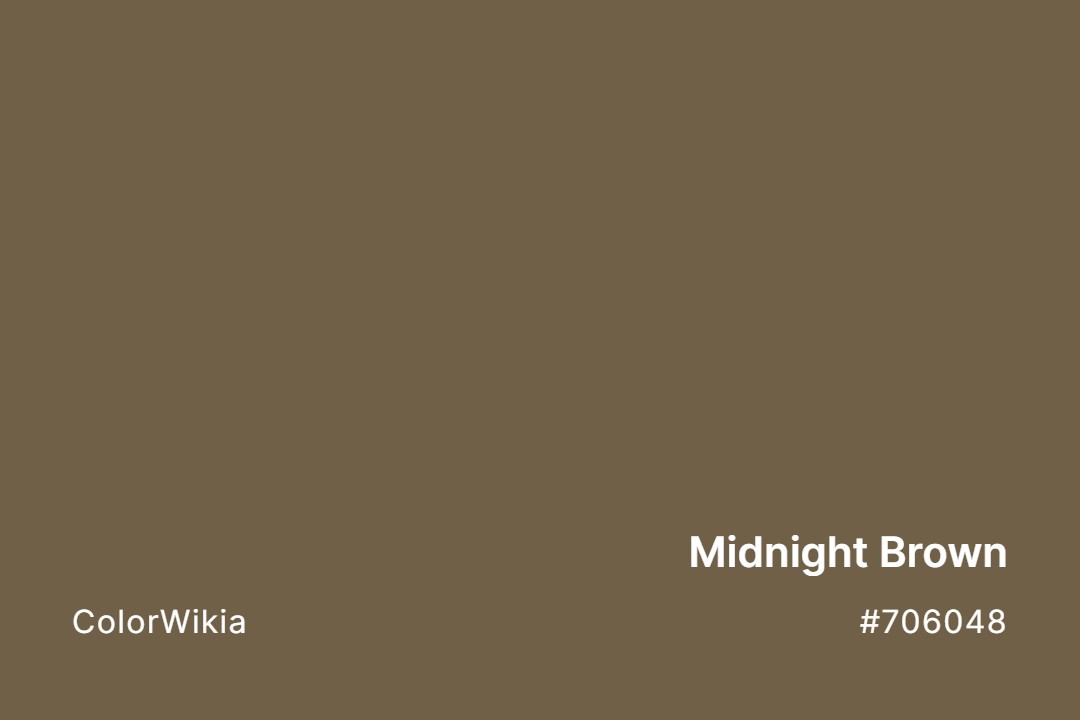
A shadowed tree trunk at dusk, khaki drained of daylight. Midnight brown color (#706048) works almost like a warm charcoal in editorial layouts. Cream type and brass accents come alive on top of it.


#706048
Midnight Brown
#1a4876
Bright Midnight Blue
#364251
Midnight Navy
#280137
Midnight Purple
#112266
Pure Midnight
#38393f
After Midnight
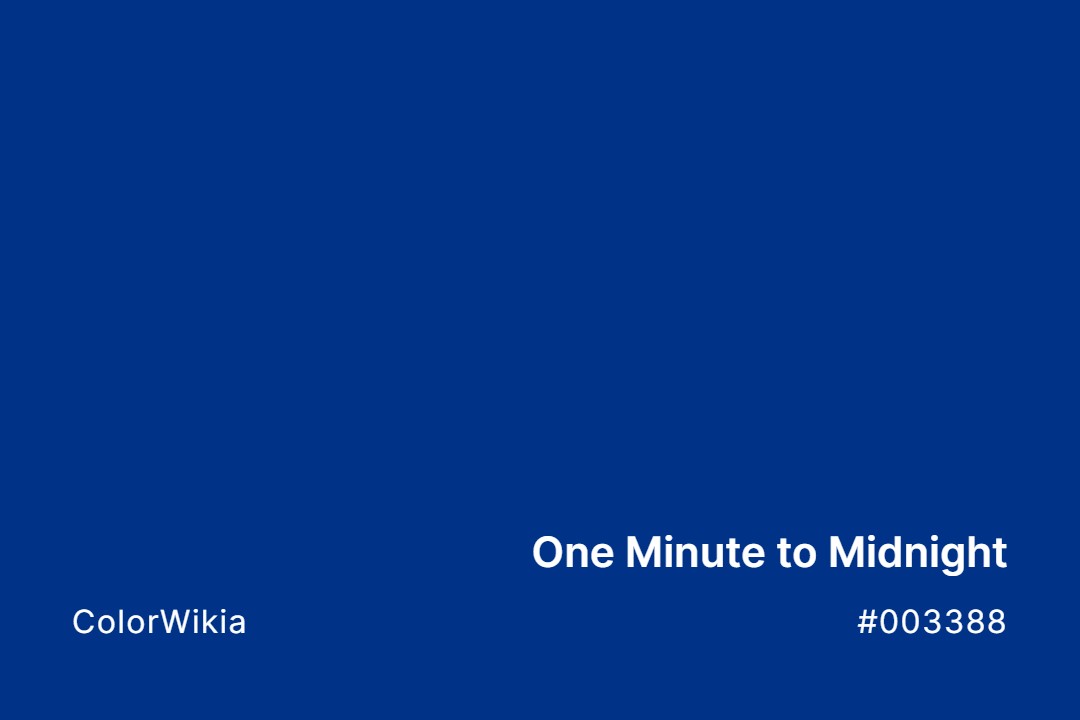
#003388
One Minute to Midnight
#204652
Moscow Midnight
#372d52
Midnight Pie
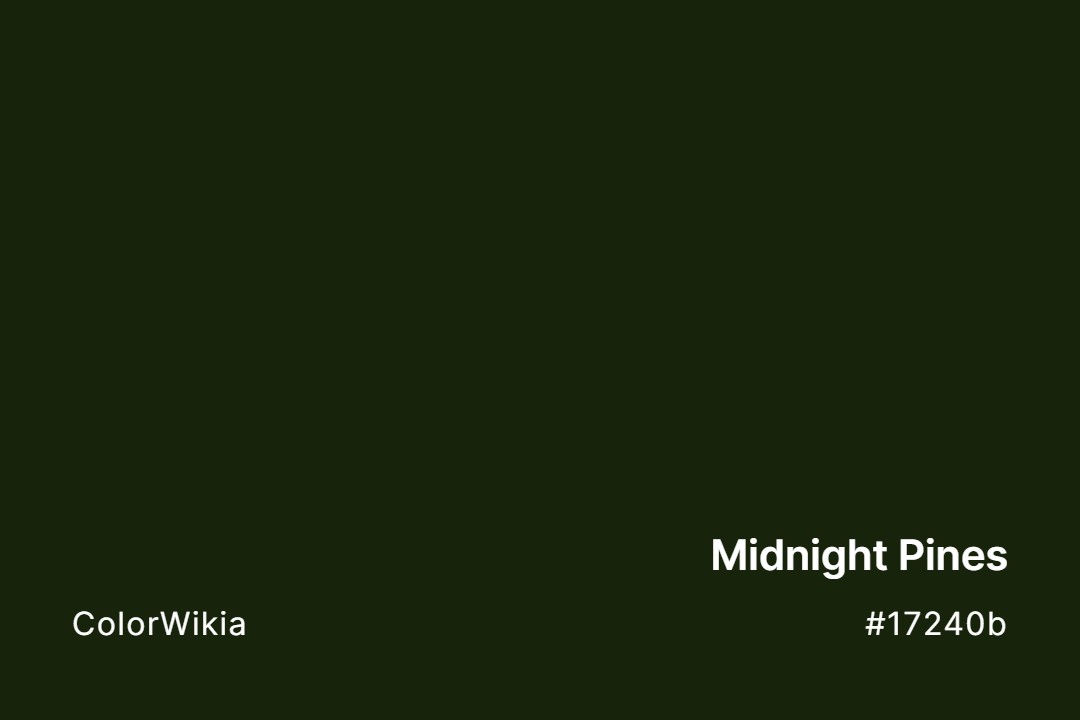
#17240b
Midnight Pines
#565b8d
Midnight Sea
#41434e
Midnight Serenade
#566373
Midnight Shadow
#546473
Midnight Show
#424753
Midnight Sky
#555b53
Midnight Spruce
#4e5a6d
Midnight Sun
#6a75ad
Midnight Violet
#03012d
Midnight
#000133
Mighty Midnight
#5f6c74
Midnight Pearl
#21263a
Midnight Express
#637057
Midnight Garden
#004953
Midnight Green
#435964
Midnight in the Tropics
#666a6d
Midnight Grey
#4e5a59
Midnight in NY
#3e505f
Midnight Haze
#dd8866
Midnight in Saigon
#3b484f
Midnight Hour
#000088
Midnight in Tokyo
#32496f
Midnight Interlude
#534657
Midnight Affair
#484d61
Midnight Iris
#585960
Midnight Badger
#0b0119
Midnight Jam
#020035
Midnight Blue
#46474a
Midnight Magic
#979fbf
Midnight Blush
#002266
Midnight Melancholia
#880044
Midnight Merlot
#3c574e
Midnight Clover
#3d5267
Midnight Mosaic
#394857
Midnight Dream
#242e28
Midnight Moss
#002233
Midnight Dreams
#403c40
Midnight Escape
#5500bb
Elegant Midnight
#003377
Dark Midnight Blue
#011993
Bright Midnight












Dark isn’t always bold. Midnight shades pull you in quietly, sitting right on the edge of black but carrying a completely different mood. They don’t shout. The depth, the calm, the near-poetic stillness of these tones is what makes them so effective in design work.
Designers, stylists, and brand creatives reach for midnight colors when the goal is subtle emotion. They create mood without demanding attention, and that restraint is exactly why they work.
What Makes a Shade “Midnight”?
“Midnight” isn’t a single color. It’s more of a category, a way of describing shades that sit one step before black on the spectrum: deep blue, dark plum, near-black greens. High saturation, very low brightness.
But don’t confuse low brightness with dullness. Midnight tones often feel richer than their lighter counterparts. Designers build them by pulling a strong base hue (like navy or maroon) far toward black, stopping just before the color disappears entirely.
In the HSL (Hue, Saturation, Lightness) model, most midnight shades hover around 5-15% lightness with moderate to high saturation. That’s what keeps them from reading as “really dark gray” and gives them that lush, layered quality instead.
Popular Types of Midnight Shades
Not every midnight color hits the same note. Here are the five most common types and where designers tend to use them.
1. Midnight Blue
Midnight Blue (#020035) gets confused with navy constantly, but the two aren’t interchangeable. Navy has warmth and familiarity to it. Midnight blue runs cooler, smokier, and deeper, named after that last sliver of sky before total darkness sets in.
You’ll find it in luxury branding, formal websites, tuxedo linings, and high-end packaging. It pairs naturally with silver, pale beige, and rich burgundy. If you’re building a professional portfolio and want something more interesting than charcoal, midnight blue is worth testing as your primary dark.
2. Midnight Purple
Where midnight blue reads formal, Midnight Purple (#280137) reads mysterious. It shifts between gothic and celestial depending on what you surround it with.
Interior designers reach for this shade when they want velvet couches, accent walls, or ceiling paint that feels intentional rather than just “dark.” In digital art, it’s a standard choice for fantasy themes. Purple at this depth hits differently than a lilac or amethyst ever could.
3. Midnight Green
Midnight Green (#004953) goes well beyond dark teal. More shadow, less saturation, noticeably cooler.
The Philadelphia Eagles put this color on the map, but editorial spreads, fashion brands, and corporate identities have relied on it for years. It reads as refined and calm without veering into cold or aggressive territory. If your design needs authority but black feels too heavy, this is the shade to try first.
4. Midnight Red (Crimson Black)
Trickier to pin down than the others. You’ll sometimes see Akai Red (#bc012e) used as a stand-in when a strong hue is needed without the brightness, but actual midnight reds are far more muted. They lean toward oxblood or maroon, like Ox Blood (#4a0404), nearly disappearing into black.
These tones show up in print, luxury packaging, and mature beauty branding where warmth matters but vibrancy doesn’t.
5. Midnight Teal
Dark Teal (#014d4e), but stormier. A touch more cyan. Some call it petroleum or ink green.
It’s become a quiet favorite for dashboards, fintech apps, and data visualization tools where seriousness is the goal but black-and-white starkness isn’t the answer.
When to Use Midnight Shades (And Why They Work)
Midnight tones do more than look good on a mood board. The darkness provides contrast, sophistication, and emotional depth while sidestepping the visual harshness of pure black.
Designers reach for them when they want:
- Emotional weight without cranking up brightness. These tones create feeling through depth, not saturation.
- Backgrounds that feel warm, not clinical. White and gray go sterile fast. A midnight shade underneath gives you the same clean look with actual personality behind it.
- A strong palette anchor. One midnight tone can hold together lighter colors that would feel scattered without it.
- Quiet confidence in the design. When the project calls for class or contemplation, midnight handles it without being heavy-handed.
Tips for Designers and Artists
- Be careful stacking multiple midnight shades. Without texture, metallics, or strong lighting contrast, they bleed into each other and you lose all definition.
- On-screen previews of midnight tones almost never match what comes off the press. Soft proof everything.
- Run WCAG contrast checks on any text sitting over midnight backgrounds. Accessibility failures at these lightness levels happen more than you’d think.
- For painting shadows, reach for midnight tones instead of black. The color temperature adds personality that pure black just absorbs.
Where Midnight Shades Show Up
- Web UI: Footers, modals, dark mode elements, navigation overlays.
- Branding: Luxury goods, law firms, indie fashion, tech startups that want sophistication without stuffiness.
- Print: Magazines, coffee table books, art portfolios where depth and contrast need to carry the design.
- Interior design: Accent walls, kitchen cabinetry, moody bedrooms.
- Fashion: Eveningwear, leather goods, tailored suiting.
Real-World Examples
Apple uses near-midnight graphite (#383838) across product photography to give hardware a sense of weight without pushing into full black. Netflix mixes a deep purple-red behind titles like The Witcher, building visual tension before the viewer even presses play. And IKEA’s BODARP cabinetry shade lands eerily close to midnight green, proof that these tones work just as well in kitchens as they do on screens.
Building Palettes Around Midnight Shades
Midnight colors need contrast around them. Stack too many darks and everything starts to feel heavy.
Soft neutrals like cream, warm gray, and pale beige keep a midnight anchor grounded. Bright accents (gold, rose quartz, electric cyan) add energy when the design needs a focal point. For subtler layering, try a slightly lighter version of the same hue to build depth without introducing an entirely new color family.
Here’s a sample palette built around midnight blue:
| Color | Hex Code |
|---|---|
| Midnight Blue | #020035 |
| Ivory | #fffff0 |
| Burnished Gold | #aa9855 |
| Pale Sky Blue | #bdf6fe |
Pro tip: Let the midnight tone take up roughly 60% of the palette. Build outward from there with two to three lighter companions, and save your brightest accent for the one element you want the eye to land on first.
Final Thoughts: The Quiet Power of Midnight Shades
Midnight is dark with intention. The appeal of these tones comes down to restraint, creating the feeling of space, silence, and depth without overdoing anything. That’s what separates midnight from black, and it’s what makes these shades worth reaching for.
Next time you default to #000000, stop for a second. Midnight might be better option.