
30,000+ Shades of Color with Names and HEX Code
Explore unique color shades for your website, brand or any project.
#246453

Embracing
#e8b8a7
Embrace
#ea6759
Emberglow
#792445
Ember Red
#cbdee2
Embellishment
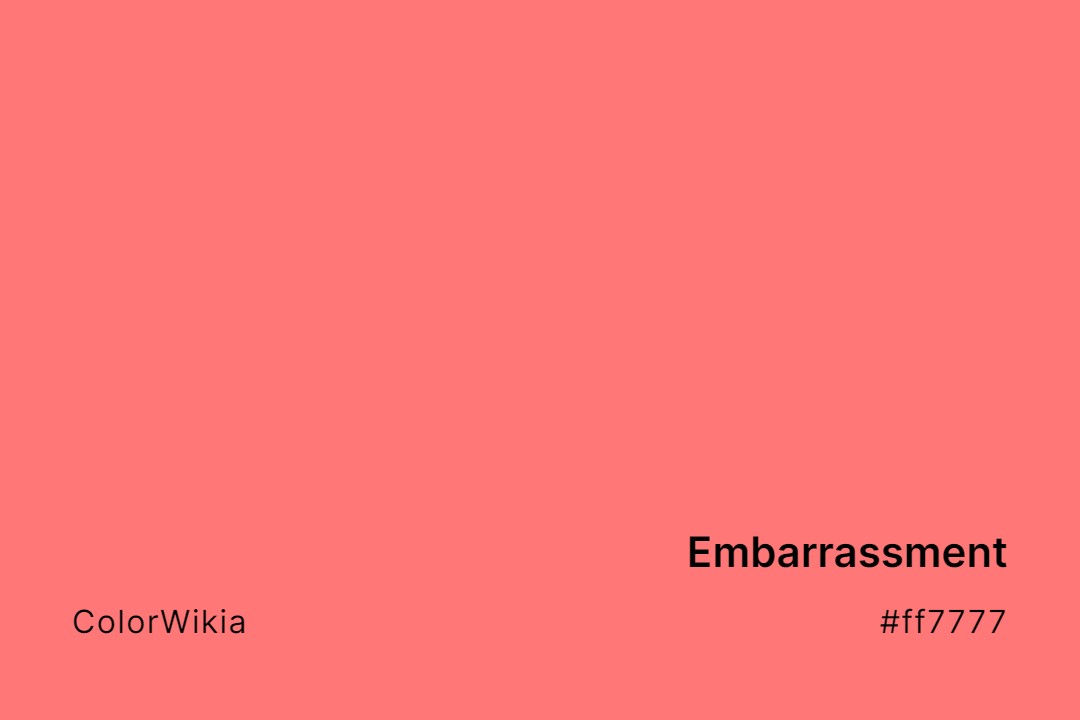
#ff7777
Embarrassment
#ee7799
Embarrassed
#996611
Embarrassed Frog
#5d4643
Embarcadero
#b4a3bb
Emanation
#ce9500
Elysium Gold
#9aae07
Elysia Chlorotica
#7a8716
Elwynn Forest Olive
#6ca024
Elven Olympics
#f7cf8a
Elven Beige
#fed7cf
Elusive
#d4c0c5
Elusive Violet
#dec4d2
Elusive Mauve
#cdbfc6
Elusive Dream
#d5bfad
Elusive Dawn
#d2cfcc
Elusion
#ffe8ab
Elote
#8c7c61
Elmwood
#264066
Elmer’s Echo
#297b76
Elm
#b25b09

Elm Brown Red
#778070
Ellis Mist
#e2c8b7
Ellen
#897269
Elkhound
#eae6dc
Elk Skin
#e9e2d3
Elk Horn
#fadfd2
Elizabeth Rose
#987fa9
Elite Wisteria
#bb8da8
Elite Pink
#d8d7b9
Elise
#ebe885
Elfin Yellow
#eddbe9
Elfin Magic
#cab4d4
Elfin Herb
#9dd196
Elfin Games
#a6a865
Elf Slippers
#68b082
Elf Shoe
#f7c985
Elf Cream
#b3c3d4
Elevated
#817162
Elephant
#88817a
Elephant Skin
#988f85
Elephant Ear
#9e958d
Elephant Cub
#a8a9a8
Elephant in the Room
#d0d3d3
Elemental
#cab79c
Elemental Tan
#5500bb
Elegant Midnight
#f1e6d6
Elegant Ivory
#c4b9b7
Elegant Ice
#fdcaca
Elegant Light Rose
#552367
Elegant Purple Gown
#e7c697
Electrum
#556d88
Electronic
#2e3840
Electromagnetic
#d41c4e
Electrifying Kiss
#5665a0
Electrify
#8f00f1
Electric Violet
#3f00ff
Electric Ultramarine
#9db0b9
Electric Slide
#55ffff
Electric Sheep
#00ff04
Electric Pickle
#cd00fe
Electric Orchid
#ccff00
Electric Lime
#7bd181
Electric Lettuce
#5cdcf1
Electric Lemonade
#89dd01
Electric Leaf
#f4bfff
Electric Lavender
#6600ff
Electric Indigo
#21fc0d
Electric Green
#ffd100
Electric Glow
#fc74fd
Electric Flamingo
#c9e423
Electric Energy
#88bbee
Electric Eel
#0ff0fc
Electric Cyan
#ff003f
Electric Crimson
#7df9ff
Electric Blue
#e23d2a
Electric Blood
#fbff00
Electric Banana
#f7f7cb
Electric Arc
#26ff2a
Electric Laser Lime
#55b492
Electra
#110320
Election Night
#40373e
Eleanor Ann
#fbf9e8
Elderflower
#2e2249
Elderberry
#afa892
Elder Creek
#ed8a09
Elden Ring Orange
#ecc083
Eldar
#dfdce5
Elation
#eca6ca
Elastic Pink
#8f4e45
El Salva
#39392c
El Paso
#946e48
El Caramelo
#b7a696
El Capitan
#d2be9d
Eire
#552299
Eine kleine Nachtmusik




The language of color can become confusing because everyday speech and color theory do not always use the word shade in exactly the same way. A page about color shades may describe a whole group of related colors, while the technical definition of a shade refers specifically to a hue made darker with black.
That difference matters when you compare taupe color shades, rust shades, or any other color family. The names people use are practical labels, while color systems provide more precise ways to describe the underlying values.
Understanding the difference between shade, tint, tone, and hue makes it easier to talk about color accurately. It also explains why one named color can have several related variations.
What Is a Color Shade?
In strict color theory, a shade is a hue with black added. Adding black lowers the lightness and produces a darker version of the starting color. A red can move toward burgundy, for example, while a blue can move toward navy.
In everyday language, people use shade more broadly. A search for “different shades of blue” may include lighter, darker, muted, and named variations that are not technically shades under the narrow definition.
That broader usage is common in design, retail, fashion, and online color references. It is also why color shade pages usually cover a family of related colors rather than only mixtures created by adding black.
The distinction is useful because it separates technical color terminology from the way people normally describe color families.
Shade, Tint, Tone, and Hue
These four terms describe different relationships between colors.
- Hue refers to the pure color position itself, such as red, blue, green, or yellow.
- Tint is a hue with white added, producing a lighter version such as pink from red.
- Shade is a hue with black added, producing a darker version such as burgundy from red.
- Tone is a hue with gray added, reducing saturation and muting the color.
The distinctions become useful when you need to describe why two colors look different. A pale blue may be a tint, while a dusty blue may be a tone and a navy blue may be a shade.
These terms can also be used together when discussing a larger color family. A named color may be lighter than the base color, darker than it, or more muted without fitting neatly into one everyday category.
How Digital Color Systems Describe Shades
Digital color systems make these relationships easier to quantify. RGB describes a color by the amount of red, green, and blue light used to create it, while HSL separates the color into hue, saturation, and lightness.
Hex codes provide a compact representation of RGB values. A six-character code such as #DC143C can identify crimson in a digital interface, but the number does not tell you where the color name originally came from or whether a physical pigment uses the same formulation.
In HSL, reducing lightness while holding hue and saturation constant moves a color toward a darker digital version. Raising lightness moves it toward a lighter version, while reducing saturation creates a more muted result.
This distinction is important when working with digital color. A color name can provide a useful visual reference, but a hex code gives you a specific digital value.
How Color Shade Names Develop
Color names often come from things people recognize. Taupe refers to the mole, while rust takes its name from corroded iron. Other names come from materials or places, including copper, terracotta, mahogany, sienna, and umber.
Language can preserve those histories even after a color becomes a digital swatch. Khaki color shades provide another example because the word traces back to a Hindustani term connected with dust and earth.
Commercial color naming adds another layer. Paint makers, textile companies, standards groups, and digital platforms may assign different names to closely related colors, so one shade does not always have one universal label.
This is one reason color names can feel inconsistent. A name can describe a recognizable visual family without pointing to one universal digital value.
Color Standards and Shade Codes
Professional color systems exist because names alone are too vague for precise reproduction. The Pantone Matching System assigns numbered references to color formulations, while systems such as Munsell describe colors using hue, value, and chroma.
The Natural Color System uses a different framework based on color perception. These systems serve different purposes, but they share the same practical goal. A numeric reference can communicate more precisely than a word such as “blue” or “green.”
That is also why a page listing color codes should distinguish between a named color, a standardized reference, and an ordinary digital hex value.
A hex code is useful for digital work, but it should not automatically be treated as a universal definition of a named color. The context behind the color reference matters.
Major Color Families and Their Shades
Every broad color family branches into many named variations. The examples below show how familiar shade names sit within larger groups.
| Color Family | Popular Shade | Hex Code |
| Red | Crimson | #DC143C |
| Blue | Navy | #000080 |
| Green | Forest Green | #228B22 |
| Yellow | Gold | #FFD700 |
| Purple | Indigo | #4B0082 |
| Orange | Coral | #FF7F50 |
| Brown | Tan | #D2B48C |
Warm families such as orange and brown include earthy variations such as rust, terracotta, and chocolate. Blue and green branch into names such as navy, teal, forest, and olive.
Neutral families work differently because their boundaries are less obvious. Beige, gray, taupe, and related colors can overlap substantially depending on saturation, lightness, and undertone.
Why named colors can overlap
A useful color family is not always a strict technical category. Two colors can look very similar while carrying different names because the names come from different materials, places, industries, or traditions.
For practical design work, it is often more useful to compare the actual color values than to rely on the name alone.
Frequently Asked Questions
What is the difference between a shade and a tint?
A shade is a darker version created by adding black, while a tint is a lighter version created by adding white.
Is a tone the same as a shade?
No. A tone adds gray and reduces saturation, while a shade adds black and darkens the original hue.
Why does one color have so many shade names?
Different industries, standards groups, companies, and cultures develop names independently. Closely related colors can therefore receive several labels.
How many shades of a color are there?
There is no fixed limit. Digital systems can generate very large numbers of distinct values, while named shades depend on the terms that become widely recognized or useful.